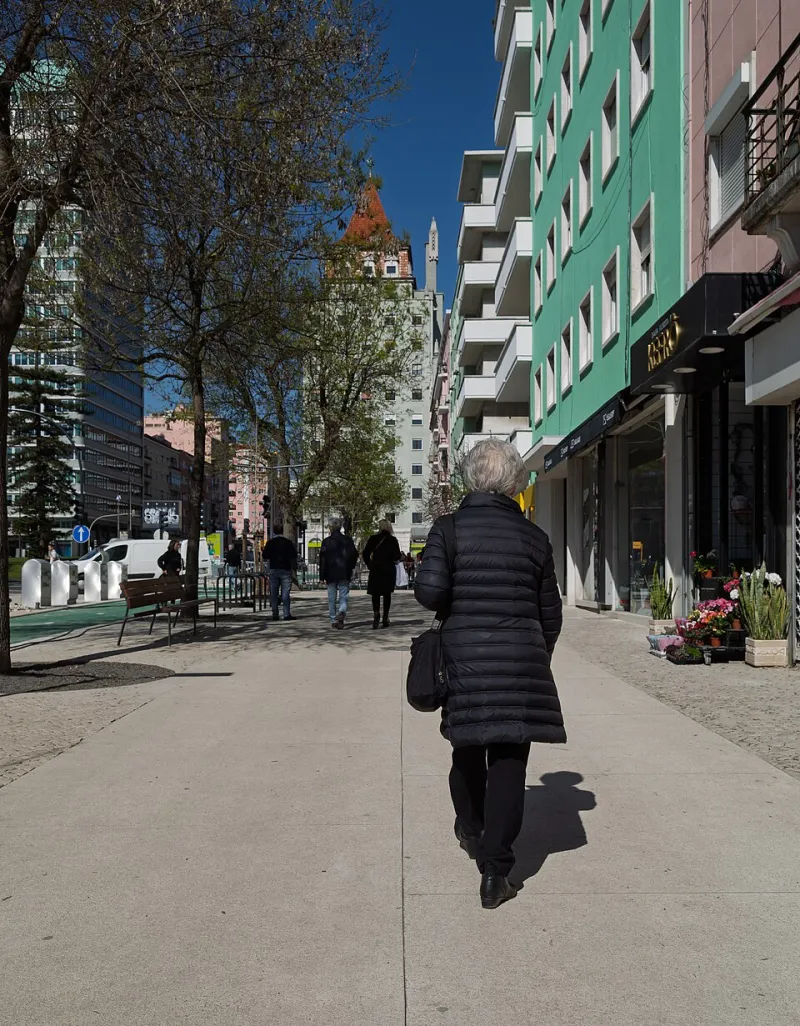
Hemline Versus Wet Pavement: Picking an Outlet Moncler for the Morning Dog Circuit
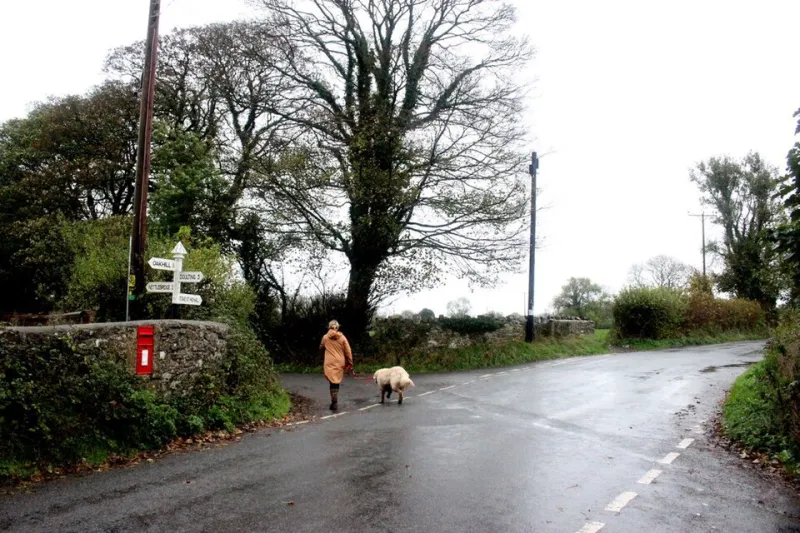
Photo: Nigel Mykura , CC BY-SA 2.0, via Wikimedia Commons
There is a moment, somewhere around 6:50am in a British November, when a jacket stops being a fashion object and becomes equipment. The sky is the colour of a wet dishcloth, the pavement has that dark, salty sheen, and the dog is already pulling towards a lamp post. This is the test most outerwear writing quietly avoids. Nobody photographs a Maya next to a bin bag of dog waste at the end of a cul-de-sac. But if you are buying an outlet Moncler to actually live in, that is the test that matters.
So let us treat the dog walk as a proper stress test. Not a fashion shoot, not a mountain expedition. Just forty minutes of drizzle, kerbs, sniffing and the occasional muddy paw planted squarely on your thigh.
Why the dog walk punishes a jacket differently
A commute is mostly vertical. You stand, you sit, you walk from A to B with your arms more or less by your sides. A dog walk is full of awkward angles: bending to clip a lead, crouching to pick something up, twisting as the dog swaps sides without warning, and holding one arm slightly forward for most of the route. That changes which parts of a jacket take the hit.
The result is that the usual questions — does it look bulky, does it photograph well, is the badge straight — matter less than three boring ones: where does the hem sit, where are the pockets, and what happens when something wet brushes against the fabric?
The hemline question
Short Moncler styles like the Maya and the Bady tend to finish around the hip. On a dry, bright cold morning that is perfect. You get freedom of movement, the jacket looks sharp, and you are not overheating halfway round the park.
On a wet morning, though, a short hem leaves a lot of trouser exposed. The splash zone — that fine spray thrown up by a car going through a puddle, or by your own boots on wet tarmac — lands squarely on the back of the thigh and the seat. If your dog likes to shake itself dry at close range, a hip-length jacket gives you almost no protection below the waist.
Longer styles such as the Ghany sit nearer the thigh or knee. That extra drop of fabric does two useful things. First, it keeps the worst of the road spray off your trousers. Second, when you crouch to pick up after the dog, the hem does not ride up quite so dramatically, so you are not exposing a strip of lower back to the wind.
The trade-off is weight and bulk. A longline down jacket is warmer, which is welcome in January and less welcome in a mild, drizzly October. It also swings more when you walk, which can feel fussy if you are used to a short puffer. For most British dog owners, though, a mid-length or longline style earns its keep between November and February.
Pockets are not decoration
On a dog walk, pockets have jobs. One hand is on the lead, so the other hand does the work: keys, phone, a spare bag, the occasional treat. That makes pocket placement genuinely important.
Chest pockets look good but are awkward to reach when you are holding a lead and wearing gloves. Hand-warmer pockets set high on the chest are warmer but sit in the wrong place when you are bending forward. The most useful arrangement for dog walking is a pair of zipped hand pockets at hip level, positioned slightly forward rather than directly at the side, plus one secure internal or chest pocket for a phone.
Flap pockets are worth a second thought. They look tidy, but a flap that does not fasten firmly can let in fine drizzle over an hour. Zips are less elegant and far more practical. If you are choosing between two outlet styles and one has proper zipped hip pockets, that is not a small detail — it is the difference between dry keys and a wet phone.
Lead friction and the wear points
Most people hold a lead in the same hand every day, and that hand does a lot of small movements. Over a winter, the cuff on that side takes more abrasion than the other. If the sleeve is slightly short, the cuff sits right at the wrist and rubs against a coat sleeve or a watch strap. If the sleeve is slightly long, it bunches and creases near the cuff.
On shorter jackets, the shoulder seam and upper arm also do more work, because the jacket rides up when you reach forward. That is not a reason to avoid short styles, but it is a reason to check the fit across the shoulders rather than just the chest. A jacket that is too tight across the back will feel much worse after twenty minutes of lead-holding than it does in a fitting room.
The muddy-paw clause
This is the clause that should be printed inside every outlet Moncler. Dogs do not respect hem lines, pocket flaps or the difference between matte and shiny nylon. A muddy paw will find the lowest, most horizontal surface of your jacket, usually within the first ten minutes.
That makes the fabric finish matter as much as the cut. Glossy nylon laqué — the classic Moncler look — wipes down easily with a damp cloth. Matte finishes look more understated but can hold onto marks a little more stubbornly, especially on lighter colours. If you already know your dog is a mud enthusiast, a darker colour and a wipe-clean finish will save you a great deal of low-level irritation.
It is also worth thinking about how often you are willing to clean the jacket. Down jackets do not enjoy frequent washing. The more often you wash one, the more the fill has to be coaxed back into shape. A jacket that shrugs off dirt with a cloth is a better dog-walking companion than one that needs a full wash every fortnight.
So which one actually survives?
For a wet British dog-walking winter, the sensible answer is usually a mid-length or longline style in a darker colour, with zipped hip pockets and a finish you can wipe. It will not look as sharp as a cropped Maya on a dry Saturday, but it will keep the spray off your trousers and the wind off your lower back.
If you only walk in dry cold and your routes are short and paved, a shorter style is perfectly reasonable. Just accept the splash zone and choose your trousers accordingly.
When you are looking at outlet stock, check the hem in a mirror while crouching, not just standing. Put your lead hand forward and see how the shoulder behaves. Zip and unzip the pockets with gloves on if you can. And check the care label before you commit — the best dog-walking jacket is the one you can clean without a fight.