Between the Platform and the Radiator: Getting an Outlet Moncler Through a British Commute

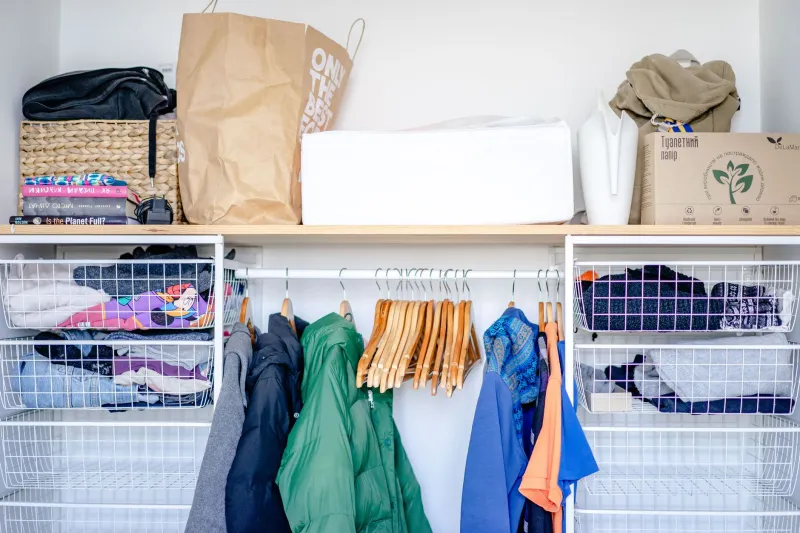
Photo: Satdeep Gill, CC BY-SA 4.0, via Wikimedia Commons
There's a particular kind of British winter morning that breaks a puffer jacket. You leave the flat at 6:40 into a wind that comes off the coast at two degrees, stand on a platform for eleven minutes, get onto a carriage heated to twenty-four, walk four minutes through drizzle, and then sit down at a desk directly beneath a radiator that nobody has thought to turn down since 2019. By ten o'clock a badly managed down jacket is damp inside, compressed flat across the back, and you're carrying it over your arm like a sleeping bag you regret bringing.
None of that is the jacket's fault. It's a scheduling problem. Down works by trapping air, and every stage of a commute does something to that air — chills it, overheats it, squashes it, wets it. Wearing it well is mostly about anticipating the next hour rather than the one you're in.
06:40 — the cold platform
The instinct is to wear your warmest thing underneath. Resist it. A thick fleece or a heavy hoodie under a Maya compresses the down from the inside, and compressed down insulates far less than the thin layers it replaced. You end up bulky and colder.
Go thin and dry instead: a merino base layer and a mid-weight knit, or a fine-gauge jumper over a cotton tee. Merino matters because it moves moisture away from you; cotton holds it against your skin and hands it straight to the down. Two hundred grams of wool is worth more here than four hundred of polyester fleece.
This is also where the model choice starts to show. The Maya sits at the hip and suits a brisk walk to the station; the Bady is similarly short but reads a touch cleaner over a collared shirt; the Ghany's longer cut covers more of the thigh on a freezing platform and looks more considered with tailoring. If your commute involves a fifteen-minute exposed walk rather than a two-minute one, the extra length earns its keep.
07:20 — the packed carriage
The carriage is the enemy. Twenty-plus degrees, forty people breathing, and your jacket doing exactly what it was designed to do: holding heat in.
Unzip before you get on, not after you've started sweating. Open the front, fold the collar back, and let the shell ventilate for the six or seven minutes it takes the train to fill. If you're standing, carry the jacket over your forearm rather than putting it on the seat next to you, where someone will sit on it.
Watch the condensation, too. A cold shell worn into a warm carriage will mist up inside as your body warms the air between you and the fabric. That moisture has nowhere to go but into the down. The fix is not to take the jacket off and on repeatedly — it's to avoid getting overheated in the first place.
07:50 — shoulder straps and the abrasion problem
If you carry a tote or a rucksack, look at the webbing on the strap. Nylon webbing against nylon shell is a slow sander, and it works hardest on exactly the spot where the jacket is under tension — the top of the shoulder. A high-shine lacquered finish will show that dulling far sooner than a matte one.
Two practical fixes: rotate the shoulder you carry on, and prefer straps that are smooth or padded rather than hard woven tape. If you use a crossbody bag daily, the Ghany's longer body distributes the rub slightly lower, but nothing beats simply not carrying the same bag the same way for four months.
08:10 — damp seats
Bus seats, train seats, the bench outside the office, the wall at the station. In November everything outdoors is holding water, and a wet seat wicks into the shell within a minute. Down that gets damp clumps, and clumped down doesn't come back without a proper wash and dry.
Sit on your bag, sit on a folded newspaper, or keep the jacket on your lap. It sounds fussy until you've spent forty minutes on a damp bench and felt the cold patch on the back of your legs for the rest of the day.
08:55 — the radiator problem
This is the one that quietly does the most damage. Draping a down jacket over a hot radiator overnight or through a working day dries out the shell too aggressively, degrades the water-repellent finish and can leave the fabric feeling papery.
Hang it on the back of a door, on a hook, or over the corner of your chair — somewhere it can breathe at room temperature. If your desk is directly under a radiator, move the jacket somewhere else entirely. And if you're genuinely too warm at your desk, take it off completely rather than wearing it unzipped with the sleeves on; half-on, half-off is how the shell gets stretched across one shoulder.
13:00 — the lunch run
The mistake here is stuffing the jacket into a bag. All that compression, twice a day, is what turns a plump puffer into a flat one by February. Roll it loosely, or better, wear it and unzip it. A ten-minute walk at four degrees is exactly the weather it was made for.
17:40 — homeward, wet
Shake it out, hang it on a wide hanger somewhere with air moving, and leave it alone. No tumble dryer unless you're doing a proper low-heat dry with dryer balls after a wash, and never a radiator. Small amounts of surface moisture will disappear overnight; a jacket that stays damp for two days will start to smell.
Looking right by ten, not just warm at seven
Colour does more of the work here than most people expect. A matte black or deep navy reads as outerwear and disappears into office dress; a high-shine finish reads as a statement, which is fine on a Friday and slightly much in a Tuesday meeting. If you want one jacket to do the whole week, matte is the safer buy.
And keep the silhouette simple. Chunky scarf, thin layers, nothing bulky underneath. A puffer worn properly looks deliberate; a puffer worn over three jumpers looks like a packing error.
The commuter kit list
- Merino base layer, two of them, rotated
- A fine knit rather than a fleece
- Smooth or padded bag straps
- A wide hanger at the office and another at home
- A reproofing spray kept in the cupboard for February
Get those five things right and the jacket will still look sharp in March, which is more than most commuters manage.